• JoomlaWorks Simple Image Rotator
  • JoomlaWorks Simple Image Rotator
  • JoomlaWorks Simple Image Rotator
  • JoomlaWorks Simple Image Rotator
  • JoomlaWorks Simple Image Rotator
  • JoomlaWorks Simple Image Rotator
  • JoomlaWorks Simple Image Rotator
  • JoomlaWorks Simple Image Rotator

20 Years ETB / Street Interviews


Get the Flash Player to see this player.

The joint venture venue of ENGLISH THEATRE BERLIN and THEATER THIKWA is located at:

Fidicinstrasse 40
10965 Berlin (Kreuzberg)
Subway:
U6 Platz der Luftbrücke
Buses: M19 & 104

Spielplan


sweepstakes new

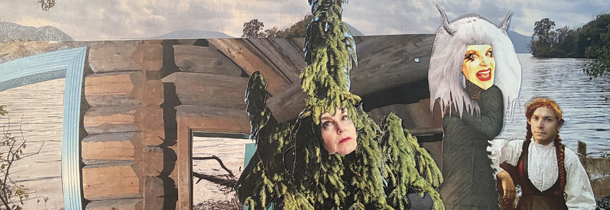
TRANSFORMATIONS

Read by Priscilla Be and Manon Kahle

 In the late 1960s American poet ANNE SEXTON spent a lot of time writing new versions of some of the well-know Grimm´s fairy tales such as Rapunzel, Snow White, or Rumpelstiltskin. In 1971, seventeen of those poetic cover versions (as they would be called were they rock or pop songs) were published in a collection called TRANSFORMATIONS. In these poems Sexton retells the tales from the perspective of "a middle-aged witch, me," creating some comic moments and leading to some surprising conclusions that are not part of the original tales.

In each of the poems, written in free verse, Sexton has a prologue in which she addresses social and psychological issues such as sexual abuse, abandonment, incest, commodification, alienation, and sexual identity. Then she retells the Grimms' tale in a modern idiom with striking and frequently comic metaphors and with references to her own experiences. Instead of a moral at the end, there is a coda that raises disturbing questions about the issues with which she has dealt. Thus ‘Cinderella’ does not end on a happy note. Instead Sexton writes:

Cinderella and the prince,
lived, they say, happily ever after,
like two dolls in a museum case
never bothered by diapers or dust,
never arguing over the timing of an egg,
never telling the same story twice,
never getting a middle‐aged spread,
their darling smiles pasted on for eternity.
Regular Bobbsey Twins.
That story.
Indeed, Sexton retold ‘that story’ or fairy stories because she wanted to unveil the ugly truths they contained to question the deadliness of bourgeois life, the power relations between the sexes, and the oppression of women. Her outlook on women's liberation was not optimistic, but her fairy‐tale poems can be considered ‘feminist’ in the manner in which they seek to deal with the ‘true situation’ of women during the 1950s and 1960s and undermine the false promises of the classical fairy tales.


 ANNE SEXTON was born Anne Grey Harvey into an upper‐middle‐class family in Newton, Massachusetts; after attending a Boston finishing school, she worked for a time as a model. In the early 1950s, during which time she gave birth to her two daughters, she had a series of mental breakdowns, and she was advised by her psychiatrist to write poetry. She received a scholarship in 1958 to the Antioch Writers' Conference, and later that year she was accepted into Robert Lowell's graduate writing seminar at Boston University, where she met and became friends with Sylvia Plath, Maxine Kumin, and George Starbuck. In 1960 she published her first important collection of poetry, To Bedlam and Part Way Back, and she also began teaching poetry at Harvard and Radcliffe. Throughout the 1960s Sexton won numerous prizes and published several collections of poetry, but she also suffered from severe depressions, attempted suicide, and was hospitalized on occasion. She won the Pulitzer Prize for Live or Die in 1967, and she taught at Boston University, worked at the American Place Theatre, and conducted poetry workshops in her home. However, she continued to feel disturbed and tried to commit suicide again in 1970, the year before she published Transformations, which was performed in an operatic adaptation in Minneapolis in 1973. This was also the year in which she divorced her husband and was hospitalized at the McLean's Hospital. The following year she took her life in the garage of her home by carbon monoxide poisoning.

All Sexton's poems are intensely personal and reflect the pain and suffering she endured during her life.

"One feels tempted to drop her poems furtively into the nearest ashcan, rather than be caught with them in the presence of such naked suffering."  James Dickey